
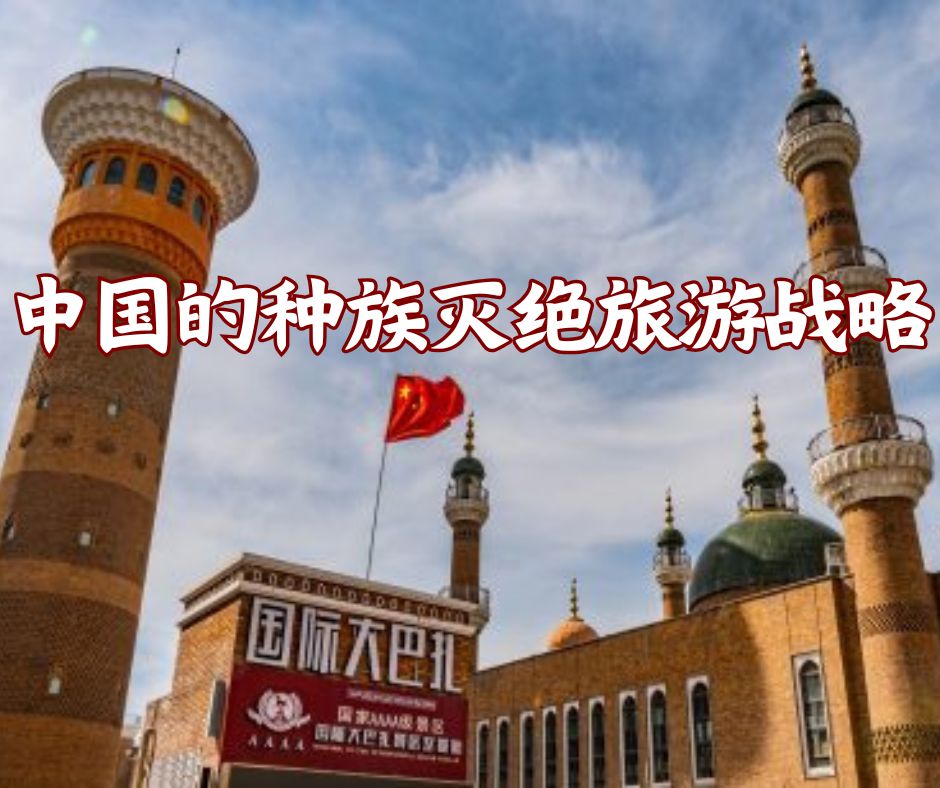
The use of tourism as a propaganda weapon is an old trick of authoritarian regimes.
将旅游作为宣传武器是独裁政权的一种老把戏。
By Magnus Fiskesjö
A journalist based in Poland recently described a surprising find: a Nazi tourist guidebook from 1943 for tourists going to the so-called General Government, Nazi Germany’s most infamous dumping zone for deported undesirables on the ashes of occupied Poland. The region’s many sightseeing spots were recast as German heritage, which proud German tourists visited with the guidebook’s help.
最近,一位驻波兰记者描述了一个惊人的发现:一本1943年纳粹为游客编制的“总督府”的旅游指南,位于被占领的波兰的废墟之上。这个所谓的“总督府”是纳粹德国最臭名昭著的用于流放“不良分子”的地区。这本指南可以帮助自豪的德国游客们参观众多被重新塑造成德国遗产的景点。
This is exactly what we see today in China’s own genocide zone in Xinjiang (called East Turkestan by the native Uyghur population).
这正是我们今天在中国的种族灭绝区新疆(当地维吾尔人称之为东突厥斯坦)所看到的。
Having suppressed all possible resistance – through a formidable surveillance apparatus, mass detention of anyone remotely suspect of pro-native sentiment, and mass forced labor for camp survivors – the Chinese government is now promoting both domestic and foreign tourism to the Uyghur region.
通过强大的监控机构、大规模监禁任何有疑似亲本土情感的人,大规模强迫再教育营的人员劳动,中国政府已经压制了所有可能的反抗,并在国内国外推广前往新疆的旅游。
The campaign is accompanied by a propaganda blitz, hoping to thwart foreign criticism of the genocide launched in 2017. A major goal is also to recruit both domestic and foreign tourists into supporters who “see for themselves” that Xinjiang is safe and good.
这些旅游推广伴随着强有力的宣传攻势,中国政府希望这可以阻扰国际上自2017以来针对其种族灭绝的批评,同时借此吸收国内和国外的观光客转为支持者,他们可以“亲眼见识”新疆是安全和美好的。
Domestic tourists are lured to Xinjiang with new infrastructure, remodeled cities and new attractions, from fake dinosaur parks to wholly new faux-historical “mystery” sites that re-appropriate Uyghur culture while exoticizing and primitivizing it.
国内的游客被流连于新疆新的基础设施、重新规划的城市建设和新鲜的景点,从人造的恐龙公园,到全新的虚构历史的“秘境”。这些景点重新挪用维吾尔族文化并包装为富有异国情调和原生态的景象。
It’s not going badly. Numbers are uncertain, but it’s clear that large numbers of domestic Chinese are visiting. Xinhua claimed 265 million tourist visits for 2023.
这策略挺成功的。具体游客数字不明,但可以明确这吸引了大量的国内游客。新华社称,在2023年访问新疆的游客达2.65亿人次。
This includes foreign visitors, and they are not just the usual crop of pro-China influencers for hire. Foreign tourists are visiting, taking in the message, and relaying it abroad – to the delight of China’s propaganda officers. Foreign tourism seems to have taken off from about 2023, when the top leader, confident in his victory, publicly sanctioned it. International tour companies began to offer Xinjiang tours, and private individuals can come, too.
这数字包括普通国外游客,而不仅仅是被聘用的亲中国网红。国外游客来到新疆旅游、带走信息、传递到海外——这让中国宣传部门的官员很是高兴。来华观光游始于大约2023年,当时的中国最高领导人对胜利充满了信心,公开批准了旅游业。国际旅游公司开始给习近平带来了旅游团,而个人自由行也被允许。
It is true that the genocide project is succeeding, overall. In the current secondary stage, over a million Uyghur children (and increasing), have been taken from their families and sequestered in Chinese boarding schools, where their language and culture is forbidden; ethnic women are systematically sterilized (while demographic and educational statistics have been made state secrets). The able-bodied are put in forced labor; hundreds of thousands of others have been sent to prison with decades-long virtual death sentences.
种族灭绝项目进行得确实非常顺利,总体而言。在目前的第二阶段,超过一百万维吾尔族儿童(数字还在增长)被从原生的家庭带走并隔离在寄宿学校。在那里他们自身的民族语言和民族文化被禁止出现。维吾尔族妇女被系统性地绝育,而人口数据和受教育数据却成了国家机密。体格健全的人被强迫劳动,其他数十万的维族人被送进监狱被判数十年的刑期,几乎等于死刑。
Uyghur culture has been decapitated, by way of the disappearance and silencing of an entire class of cultural leaders, artists, scholars, and the like. Historic monuments and holy places are bulldozed, so that they cannot form a foundation of any resurgent future Uyghur identity. All this points to the intended outcome of the entire genocide project: The breaking and eradication of Uyghur identity – while fashioning Chinese-speaking factory workers out of the survivors.
整个维吾尔族文化阶层领袖、艺术家、学者等或被消失、或被禁言,这已经彻底摧毁了维吾尔文化。历史遗迹和圣地被铲平,导致以后再没有可以复兴维吾尔人身份的基础。所有的这些,都指向一个种族灭绝项目的预期目标:打断并根除维吾尔人身份,将幸存者打造成讲汉语的产业工人。
Meanwhile, news reporting is strictly controlled – and this too is working. When there are no TV pictures of the suffering, world media go silent. There is in fact a constant stream of news, but it often concerns events that happened months before. Leaked footage is rare. At best, what emerges is fleeting social-media clips and recordings with glimpses of the abuse – clips that typically can’t be verified by the usual journalistic standards.
与此同时, 新闻报道是被严格控制的——这同样起作用。当电视上没有关于苦难的画面时,世界媒体就无动于衷。事实上,确实有持续不断的新闻,但那通常是好几个月前发生的事件,泄露出的影像资料极少。社交媒体上最多见的只是短暂的片段和画面,一晃而过的虐待行为,而这通常无法按常规的新闻报道标准进行验证。
The classic Communist Party strategy is to hide reality, and instead concoct and push sanitized alternative facts, a palatable alternative “truth” foisted on the public. This, too, often works – on both foreign and domestic tourists.
共产党最典型的策略是隐藏真相,取而代之的是编造事实,推送净化后的好故事,强迫公众接受这替换后的事实。这通常也很奏效,不仅对国内旅客,也对外国游客。
“Seeing is believing” is the core slogan of China’s tourism promotional propaganda in English. What they want tourists to see in Xinjiang are bustling shopping streets with food stalls, fake dance performances, and so on, a “normality” of sorts that presents itself to tourists as believable. They may not understand that this is selective. Tourists don’t see the hundreds of thousands of Uyghurs in prisons, the forced labor industries, the locked boarding school system, or the razed heritage – because it isn’t in their line of sight.
”眼见为实“是中国旅游宣传最核心的口号。他们让游客在新疆看到繁忙的购物街和小吃摊位,假的舞蹈演出等等,呈现给游客一种”常态“的生活。游客们或许不懂这些都是可选择性的。他们看不到在监狱里的数十万维吾尔人,看不到强迫劳动工厂,看不到封闭的寄宿学校系统,看不到被铲平的遗产——因为这不在他们的视线内。
Instead, they see Chinese commerce, alongside select tokens of a Disney-fied Uyghur heritage designed to suggest that Uyghurs once lived there. This same message is implied by the use of mosques as restaurants or tourist hotels (if they aren’t razed): There are no worshippers, religion is out, so new (Chinese) entrepreneurs have taken over. Meanwhile, Uyghur-owned restaurants, like the Miraj chain in the provincial capital of Urumchi, have been closed and the owner detained.
相反,他们看到中国的商业,以及迪士尼化的维吾尔遗产精致符号,表明维吾尔人曾经在那儿生活。同样的,清真寺被用作餐厅或旅游酒店(如果没有被铲平的话)。没有信徒,没有宗教,取而代之的是新鲜的中国企业家。而同时,维吾尔人经营的餐厅,比如省会乌鲁木齐的 Miraj 连锁店,却被迫关闭,老板被捕入狱。
This bolsters the Chinese tourists’ sense of being modern, and therefore superior to the local surviving Uyghurs they now treat as servants. It is all eerily reminiscent of the heyday of European colonialism, which produced similar sentiments in members of the “master race” visiting the subdued colonies.
这增强了中国游客的现代感,并由此产生了自我优越感,而把当地幸存的维吾尔人视为下等佣人。这离奇地让人回想起欧洲殖民主义的鼎盛时期,”上等民族“在访问被其征服的殖民地的时候产生的类似的感觉。
As Melissa Shani Brown and David O’Brien have observed, it is also a “testimonial gaze” that internalizes the official re-scripted memory about the meaning of the Xinjiang colony, and the gazer then regurgitates it when called upon.
正如Melissa Shani Brown 和 David O’Brien 所观察到的,它也是一种”见证式游客视角“,用于内化官方的脚本记忆,重新改写关于新疆殖民地的意义,而当需要的时候,游客们就可以依样复述出来。
Domestic Chinese visitors are also encouraged to stay – going beyond the peculiar Chinese system of mass home-stay monitoring (by which Han Chinese settlers move in with not-yet incarcerated Uyghurs). In another eerie parallel to the Germanification through resettlement in Nazi-occupied Europe, the Chinese in Xinjiang also take over houses emptied when their Uyghur owners and their entire families were detained and disappeared. The houses are offered for cheap to incoming new Han Chinese settlers – along with job offers and Uyghur women for marriage.
中国国内游客也会被鼓励留在当地,这比中国奇特的大规模家庭寄宿监控系统更超越了一步。在寄宿监控系统中,汉人会搬到还未被拘禁的维吾尔人家庭同住。这和纳粹占领时的欧洲可怕的相似,当时通过重新安置居住以实行德国化。在新疆的中国人同样占领了维吾尔人空了的房子,当房子主人和他们的整个家庭或被拘禁或被消失的时候,这些房子被以低价提供给新来的中国汉人,同时提供的还有工作机会和可作为结婚对象的维吾尔族妇女。
China’s 21st century settler-colonialist project is increasingly being addressed by new scholarship that is breaking a longstanding taboo on recognizing China’s colonialism as directly comparable to similar examples in history.
中国21世纪”居民-殖民“的项目正越来越受到新学术结构的关注,他们正打破一个长久存在的禁忌,意识到中国的殖民主义可直接比较历史上相似的案例。
What is not often recognized, however, is the direct parallels between China’s weaponizing of tourism and the very similar efforts undertaken by other authoritarian regimes.
然后,一个没有被经常认识到的问题是中国将旅游的武器化可直接等同于其它威权国家相似的行为。
I myself have experienced this as a tourist both in China and in the former Soviet Union, where the policing of tourists and the constraints on their movements was everywhere. In Russia, it was obviously designed to ensure that we would only see the approved sights.
我自己就有过这样的旅游经历,在中国,也在前苏联,两地对游客的管制和对其行动的限制无处不在。在俄罗斯,很明显,我们被确保只能看到那些经过批准的景点。
This Soviet obsession with bringing foreigners in while attempting to shape their experience as testimony for the sake of propaganda – as with the domestic population, but seizing upon the perceived higher value of outsiders’ testimony – originated with the Soviet “Cultural Diplomacy of a New Type” from the 1920s onward, perfected in the curating of Stalin’s “fellow travelers.”
延续前苏联的方式引进外国游客,并试图构筑他们的旅游体验来为官方的宣传提供证词——这同样适用于国内游客,但利用外来游客可以有更高的价值。这种方式始于20世纪20年代前苏联”新型文化外交“,完善于斯大林精心打造的”游客朋友“策略。
The above-mentioned example of Nazi Germans induced to travel to occupied Poland also parallels the Chinese case. Readers of the General Government tourist guidebook were taking in a place redefined by the regime, to be experience as per Nazi-style nationalism.
上边提到的纳粹德国在波兰占领区推广旅游业的案例可类比于目前中国的案例。翻看着官方旅游手册时,读者会被带进一个被统治政权重新定义的地区,这种体验可类似于纳粹国家主义。
In fact, the Nazi regime made huge coordinated efforts on this sort of “genocide tourism,” including through government promotional initiatives like “Strength Through Joy” (Kraft durch Freude). It was wildly successful, up to the launch of World War II – and not just commercially. As Kristin Semmens explained in her book “Seeing Hitler’s Germany: Tourism in the Third Reich,” it also recruited many tourists into believers in the “normality” of Nazi Germany and even defenders of its superiority of its system.
事实上,纳粹政权投入巨大的协调工作来制定这种”种族灭绝观光游“,包括政府部门的推广倡议,比如“力量通过快乐”(Strength Through Joy,Kraft durch Freude)注1。
Julia Boyd’s “Travellers in the Third Reich” describes what it was like to travel in Nazi Germany “without the benefit of post-war hindsight” – when the images of Nazi atrocities had not yet etched themselves into our minds.
Julia Boyd的《第三帝国的旅行者》描述了在还没有战后反思之前,在德国旅行的经历,那时纳粹的暴行还没有进入我们的脑海里。
Like China today, to foreign tourists Nazi Germany often seemed like a fun, affluent, and friendly place, with lots of great sightseeing for the tourist to do. American and British tourists were greatly encouraged by the regime, and came to vastly outnumber those from other countries (half a million Americans visited in 1937). Americans and British even sent large numbers of their children to study in Hitler’s Germany!
和今天的中国很像,对于外国游客来说,纳粹德国显得有趣、富足和友善,也有着很多美丽的观光景点。美国和英国的观光客很受德国统治阶级的欢迎,数量大大超过其它国家的游客(1937年记有50万美国游客)。美国人和英国人甚至把大批的子女送到希特勒德国学习。
Julia Boyd relays the favorable impressions of the Third Reich from the many British and American visitors who relished holidaying there, year after year, “even as the more horrific aspects of the [Nazi] regime came under increasing scrutiny in their home countries.”
Julia Boyd描述了许多英国和美国游客对第三帝国的正面印象,他们享受着那里的假期,一年又一年,“甚至当时有越来越多关于纳粹政权恐怖的行为在他们祖国正接受更多的审查”。
Meanwhile, the Nazi regime pressed on, welcoming tourism, confident that “seeing is believing.”
与此同时,纳粹德国则继续坚定地欢迎旅游观光,对”眼见为实“充满自信。
注1:“力量通过快乐”(Kraft durch Freude, KdF)是纳粹德国时期的一个工人福利项目,通过提供旅游、文化和娱乐活动,旨在增强工人身体素质和精神状态,同时加强他们对国家的忠诚。尽管这个项目在表面上提高了工人的生活质量,但它实际上是纳粹政权为传播其意识形态和巩固控制所设计的工具。

 WENZHAI
Leave a comment